Airalo Review: Is It the Best Travel eSIM in 2026?
The broadest coverage and the friendliest prices — with a few trade-offs
Airalo review: is it legit? Local, regional and global eSIMs for 200+ locations, unlimited options, how validity works and where it falls short.
By NorwegianSpark Editorial — written with AI assistance and reviewed by the NorwegianSpark SA editorial team.
Is Airalo legit? Yes — it is one of the biggest names in travel eSIMs (Airalo itself says more than 30 million people have chosen it), and for most travellers it is the sensible default. It sells local, regional and global data plans across 200+ locations, including unlimited-data options, all delivered instantly through its app — you buy the data you need for a destination, install it before you fly, and switch it on when you land. This review covers what it does well, its genuine limitations, and the traveller it suits best. For the wider field, see our roundup of the best travel eSIMs in 2026.
What you get
- Coverage in 200+ countries — the broadest of any provider, so one app covers almost anywhere you travel.
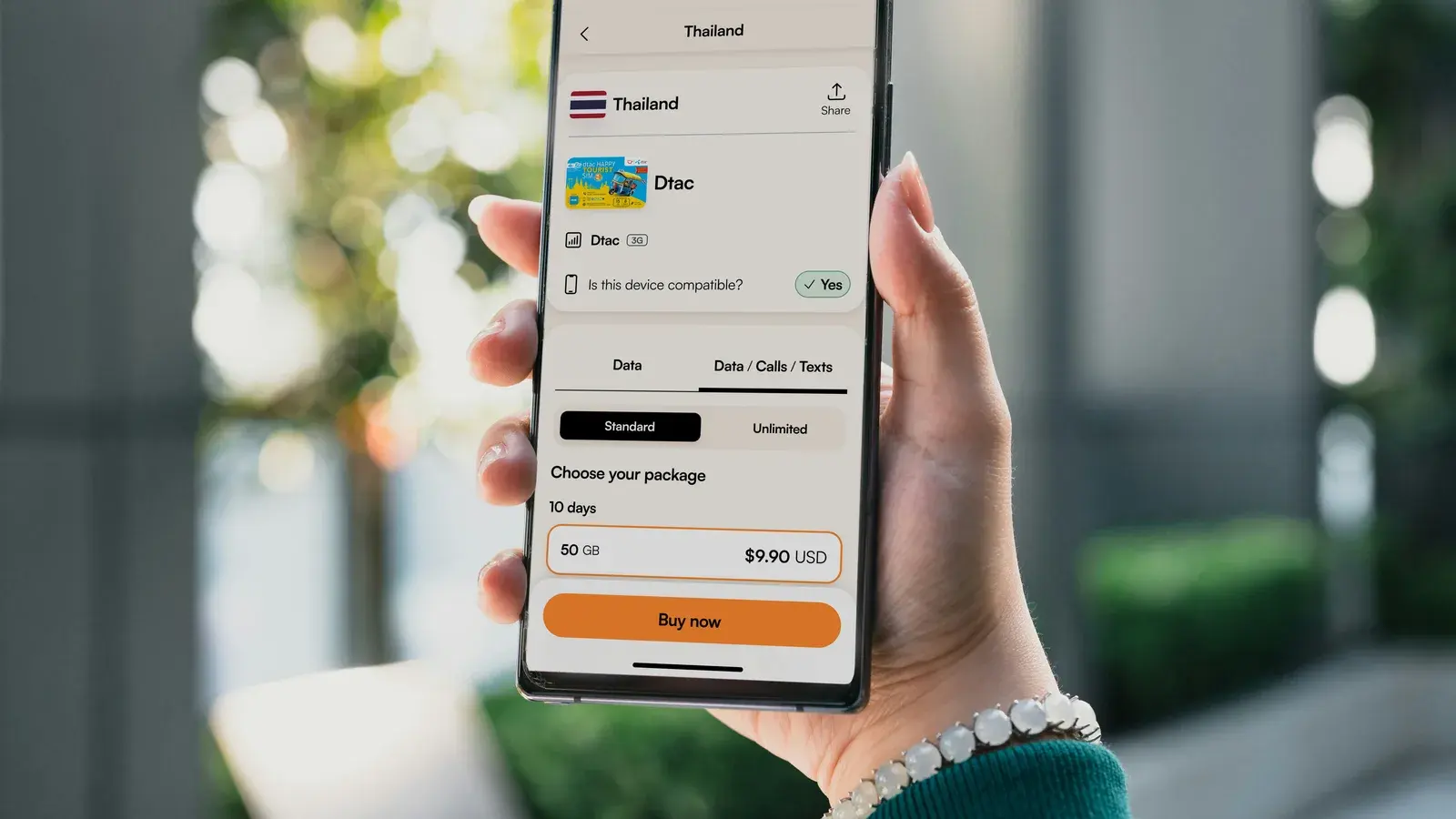
- Three plan types: LOCAL (one country, best value), REGIONAL (a group of countries, ideal for multi-stop trips), and GLOBAL (many countries on one plan, for frequent flyers).
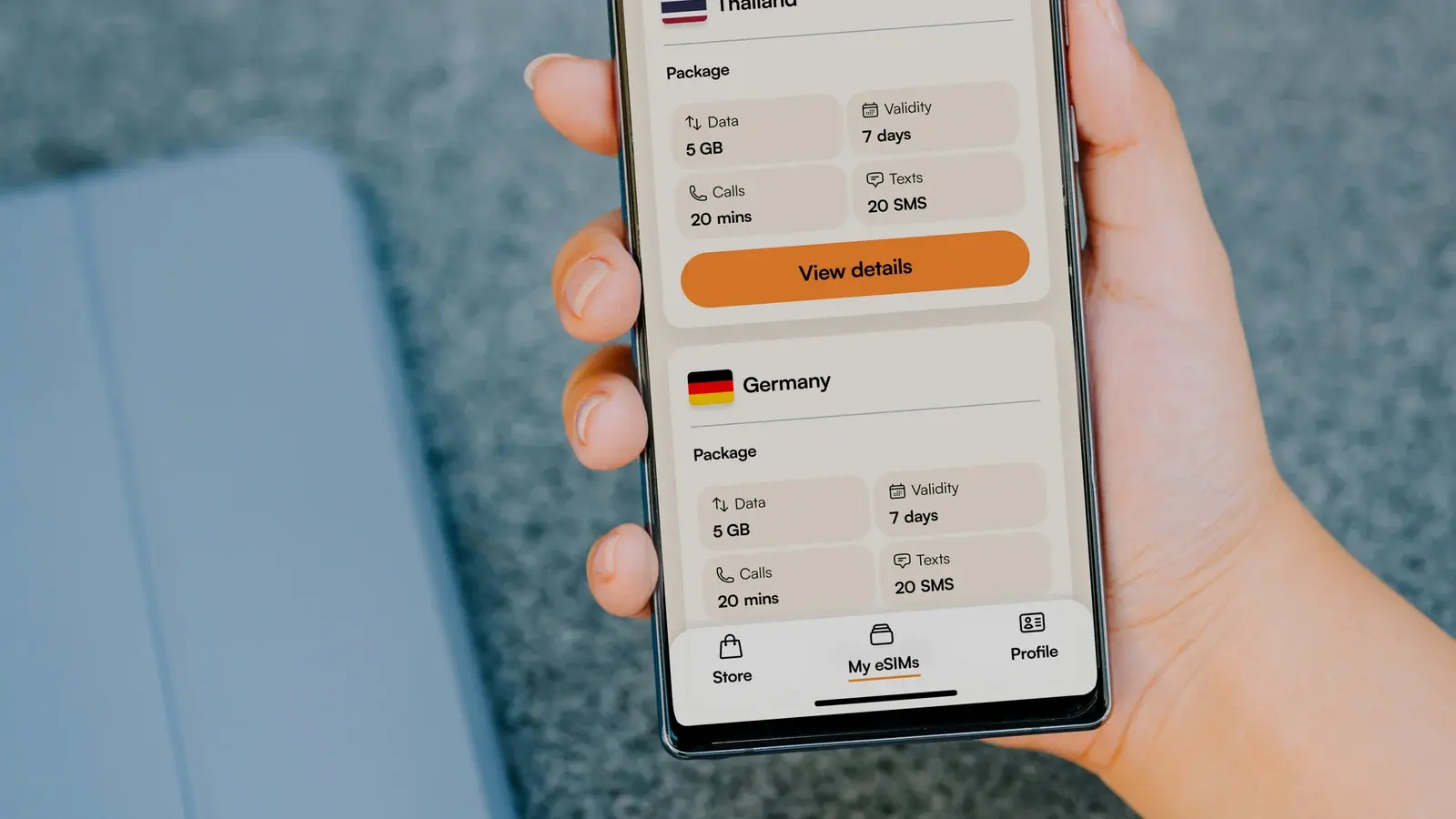
- Pay-for-what-you-need data amounts, with in-app top-ups if you run low mid-trip — plus unlimited-data packages where you would rather not count.
- A validity clock that, on most plans, starts only when the eSIM connects to a supported network at your destination, not when you buy or install it.
- 24/7 multi-language support, including chat on WhatsApp, and an app available in 53 languages.
- Instant delivery and setup in the app — no waiting, no shipping, no airport queue.
Partner
Airalo
Local, regional and global eSIM data for 200+ countries. Install before you fly, activate on arrival.
Where Airalo shines
Two things stand out. First, coverage: because Airalo operates almost everywhere, you can rely on one familiar app whether you are in Japan, Mexico or Morocco, rather than learning a new provider for each trip. Second, value on short-to-medium trips: metered plans mean a weekend traveller who needs maps, messaging and the occasional ride does not subsidise data they will never use. It is also one of the most trusted names in the category, which matters when you are handing over card details for a service you will depend on abroad.
Where it falls short
Most of Airalo's plans are metered, so genuinely heavy users — people who tether a laptop all day or stream constantly — can burn through an allowance and need to top up more than they expected; the unlimited packages are the alternative, so read their terms for your destination. Speeds also depend on the local partner network Airalo rides on in each country, so performance varies by destination rather than being uniform everywhere. If you want more flexible plan formats, such as pay-as-you-go, it is worth comparing against Yesim — see Airalo vs Yesim.
What you are actually buying
Airalo is a marketplace rather than a mobile network, and understanding that shapes sensible expectations. In each country it sells, your phone connects to a local operator's masts as a visiting subscriber, under an arrangement Airalo has made with that operator. The app, the billing, the support and the plan structure are Airalo's; the signal is somebody else's. This is not a criticism — it is how essentially every travel eSIM works — but it explains why the same brand can feel excellent in one country and merely adequate in the next, and why the review that matters is the review for your destination rather than the company's overall rating.
It also tells you which questions are worth asking on the product page. Which local network the plan uses, whether the plan permits tethering to a laptop, whether a top-up extends the validity period or only adds data to the days remaining, and what happens to any allowance you have not used when the period ends. These are the details that separate two plans that look identical in a list.
Setting it up
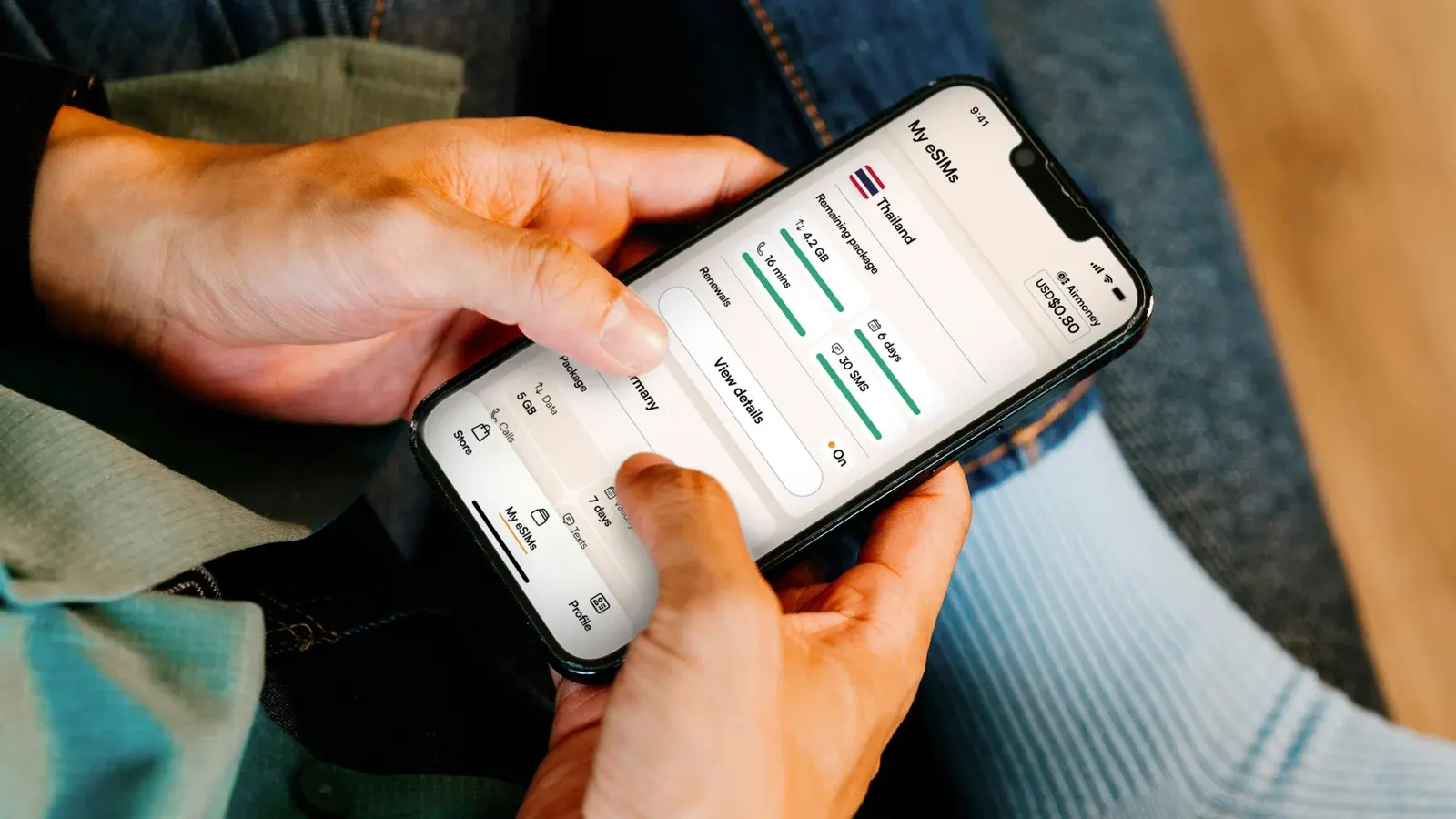
Setup is quick: download the app, buy your plan, and install the eSIM when prompted (the app walks you through it). A good habit is to install before you fly while you still have your home connection, then simply toggle it on after you land. If any of that is unfamiliar, our what-is-an-eSIM guide covers compatibility and installation step by step.
Two habits make the difference between a smooth arrival and twenty minutes of fiddling in an airport. Label the new line something obvious the moment it installs, because two unlabelled lines in a settings menu is exactly the ambiguity you do not want when tired. And decide, before you fly, which line handles what: the travel eSIM for data with roaming enabled on that line, and your home line kept active for text messages but with its own data roaming switched off so it cannot quietly bill you.
If it does not work on arrival
Most activation problems are one of a short list, and working through them in order resolves the great majority without contacting anyone. Confirm the eSIM line is switched on at all. Confirm data roaming is enabled for that specific line, which feels wrong and is nevertheless required, because from the host network's perspective you are roaming. Confirm the eSIM is selected as the line for mobile data rather than merely being present. Check whether your phone has an automatic data-switching setting that may be falling back to your home line. Then, if the phone shows a connection but nothing loads, look for the access point name setting, which some providers require to be entered by hand. Only after all five is it worth opening a support conversation, and by then you can describe precisely what you have already ruled out.
Who should look elsewhere
To give the alternatives their due: Airalo suits a majority, not everyone. If you tether a laptop for a working day, a metered travel plan is the wrong shape of product and you will spend the trip topping up. If you are staying in one country for a month or more, a local prepaid plan will almost certainly beat it on cost and hand you a local number as well. If you need to receive local calls or texts — for a delivery, a driver, a domestic account — no data eSIM solves that, and eSIM versus physical SIM sets out when the plastic still wins. And if you want plan formats beyond a fixed allowance, Airalo versus Yesim is the comparison to read.
Verdict
For the majority of trips, Airalo is the eSIM we would reach for first — the coverage is unmatched and the value on normal use is excellent. As always, confirm the current plan and price on Airalo's own page before purchasing, since data amounts and pricing change.
Partner
Airalo
Pick your destination, choose a data amount, and land already connected.
Frequently asked questions
How many countries does Airalo cover?
More than 200 — the broadest coverage of any provider, which is why one familiar app works whether you are in Japan, Mexico or elsewhere.
What kinds of plan does Airalo sell?
Three types: LOCAL for a single country, regional plans, and global plans, all sold as pay-for-what-you-need data.
Is Airalo good for heavy data use?
Its fixed-allowance plans are not: genuinely heavy users — people who tether a laptop all day or stream constantly — can burn through an allowance and need a top-up. Airalo now also lists unlimited-data packages, so if heavy use is the point, compare those terms for your destination before buying.
Is Airalo legit?
Yes. Airalo is one of the largest travel-eSIM sellers, with apps on the App Store and Google Play, plans for 200+ locations and 24/7 multi-language support. It sells access to local partner networks, so check reviews for your specific destination rather than the brand's overall rating.
When does an Airalo plan start?
Airalo says the validity period starts when the eSIM activates, and that most of its eSIMs activate when the installed eSIM connects to a supported network at your destination — so installing before you fly does not start the clock on most plans. Compare it with Saily and Holiday.com if you want a second option, or see our [country eSIM guides](/esim).
Continue Reading
More from the Journal

Continue in this collection

Travel Planning
Budgeting, insurance and concierge services, judged on what they do when a trip goes wrong.

Travel Guides
Destination guides written to be used on the ground: where to stay, eat, and what to skip.

5-Star Hotels
What actually earns the fifth star, and which properties are coasting on one they were given years ago.