
The Best Travel eSIMs in 2026
Stay connected the moment you land — without a roaming bill
The best travel eSIMs in 2026 compared: Airalo for coverage, Yesim for flexible formats, Saily for a security brand, Holiday.com for one reusable eSIM.
By NorwegianSpark Editorial — written with AI assistance and reviewed by the NorwegianSpark SA editorial team.
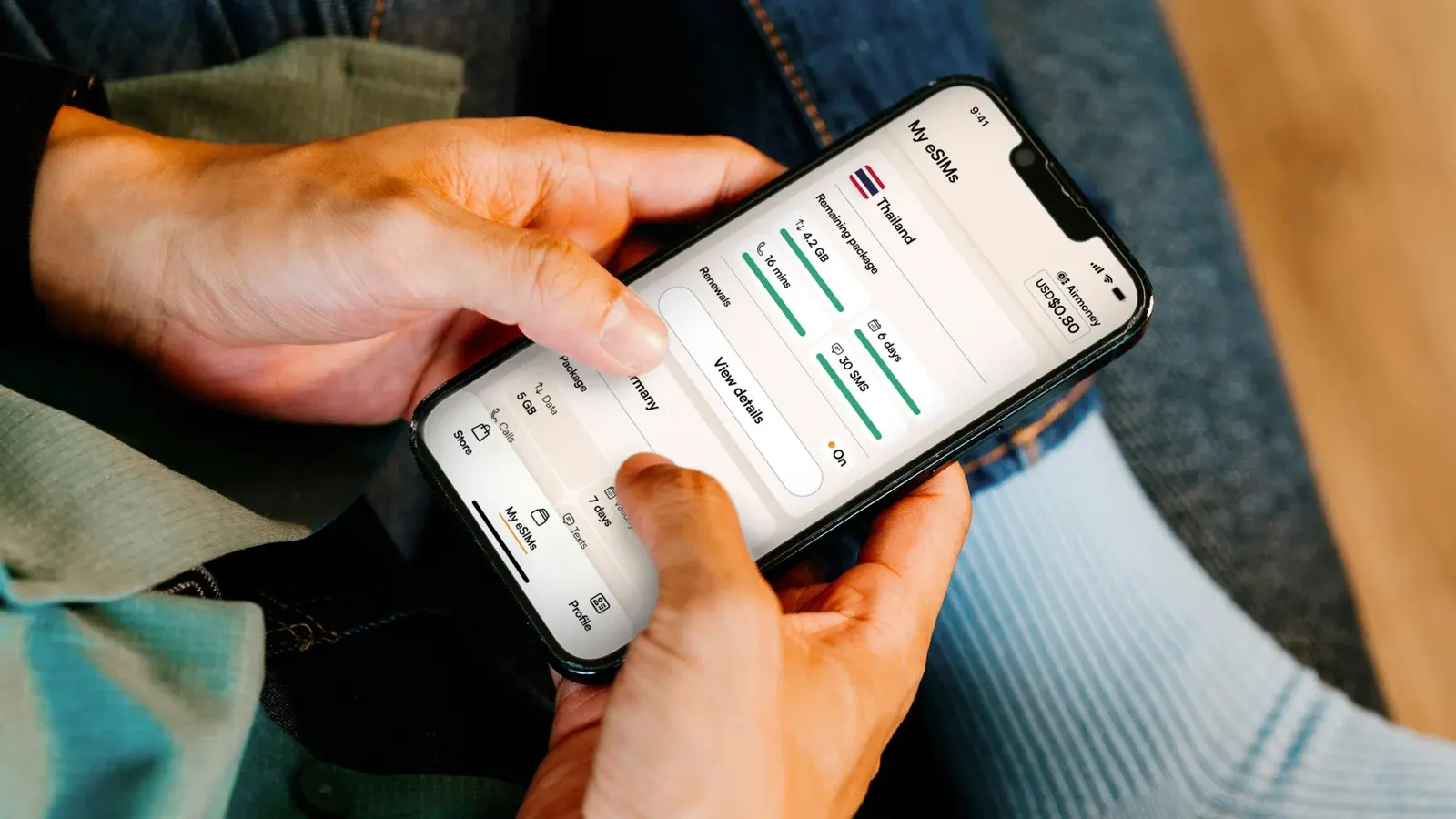
A travel eSIM is the simplest way to step off a long-haul flight already connected — maps loading, messages arriving, your ride booked — with no roaming bill waiting for you at home and no hunting for a kiosk to buy a local SIM. You buy a data plan online before you leave, install it in a couple of minutes, and switch it on when you land. For most travellers in 2026 it has quietly replaced both eye-watering roaming and the old ritual of queuing at an airport SIM counter.
The short answer: for the broadest coverage and best value, Airalo is the default choice — it covers 200+ countries and lets you buy exactly the data you need. If you want more flexible plan formats, including a global option and pay-as-you-go, Yesim is the strong alternative. Below is how they differ and how to pick. If eSIMs are new to you, start with our plain-English guide to what an eSIM is and how it works.
| Travel eSIM | Coverage (provider's own figure) | Plan types | Stand-out feature | Best for |
|---|---|---|---|---|
| Airalo | 200+ locations | Local, regional, global; unlimited options | Largest marketplace; validity starts on connection at destination on most plans | Most travellers, one or a few countries |
| Yesim | 170+ countries on its Pay & Fly eSIM | Per-country, regional, global; pay-as-you-go; unlimited day pass | Pay as you go and keep unused balance for the next trip | Unpredictable usage |
| Saily | 200+ destinations | Per-country, regional, global; 1 GB to unlimited | From the NordVPN team; built-in ad and malicious-site blocking | Buyers who want a security brand |
| Holiday.com | 150+ destinations | Country plans plus Europe, Asia and global passes | From the ExpressVPN family; browser checkout, one reusable eSIM | Multi-country trips |
Coverage figures are each provider's own, checked on their websites on 30 September 2026; providers count destinations differently, so compare the exact country list for your trip rather than the headline number.
What a travel eSIM actually is
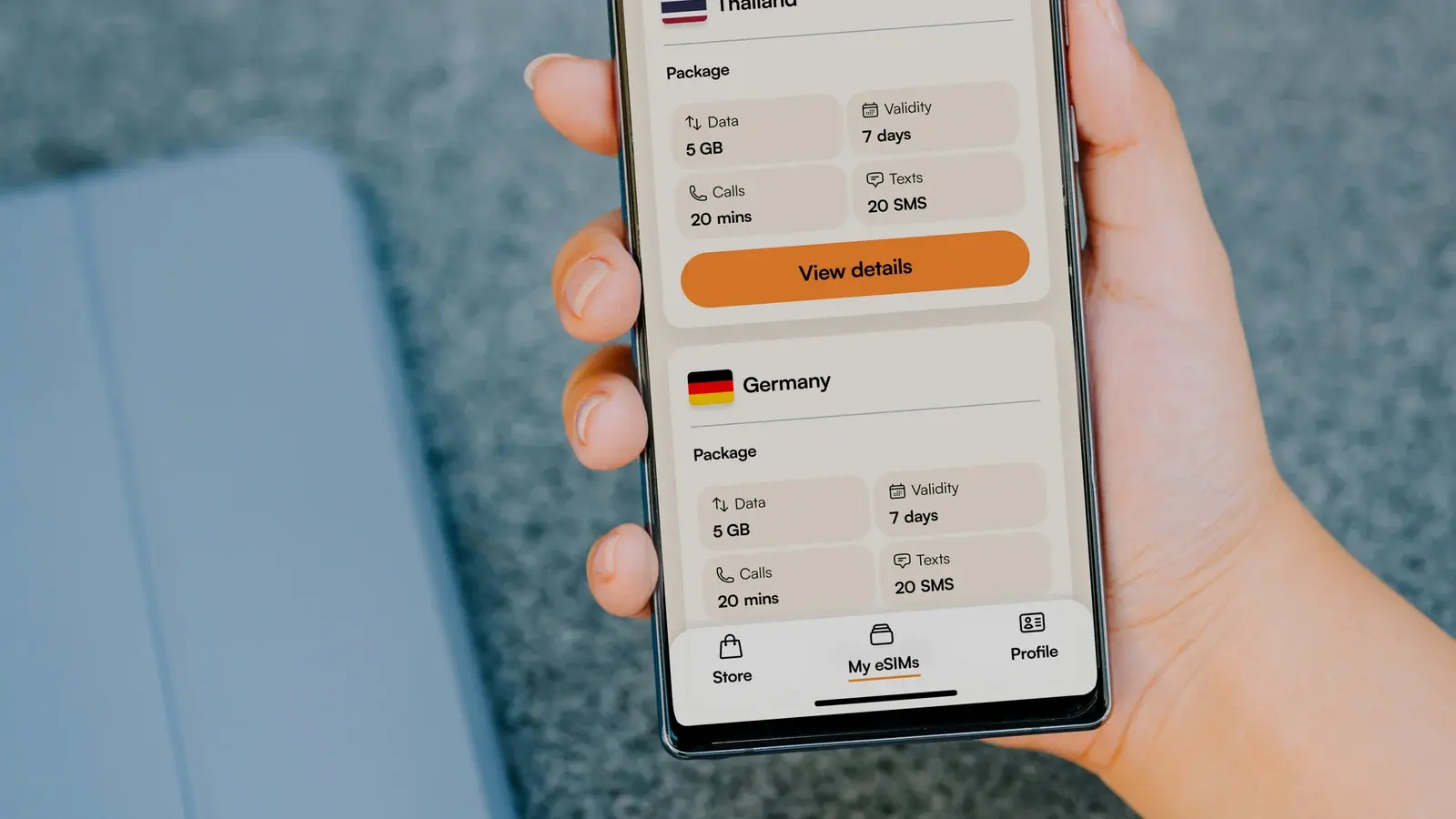
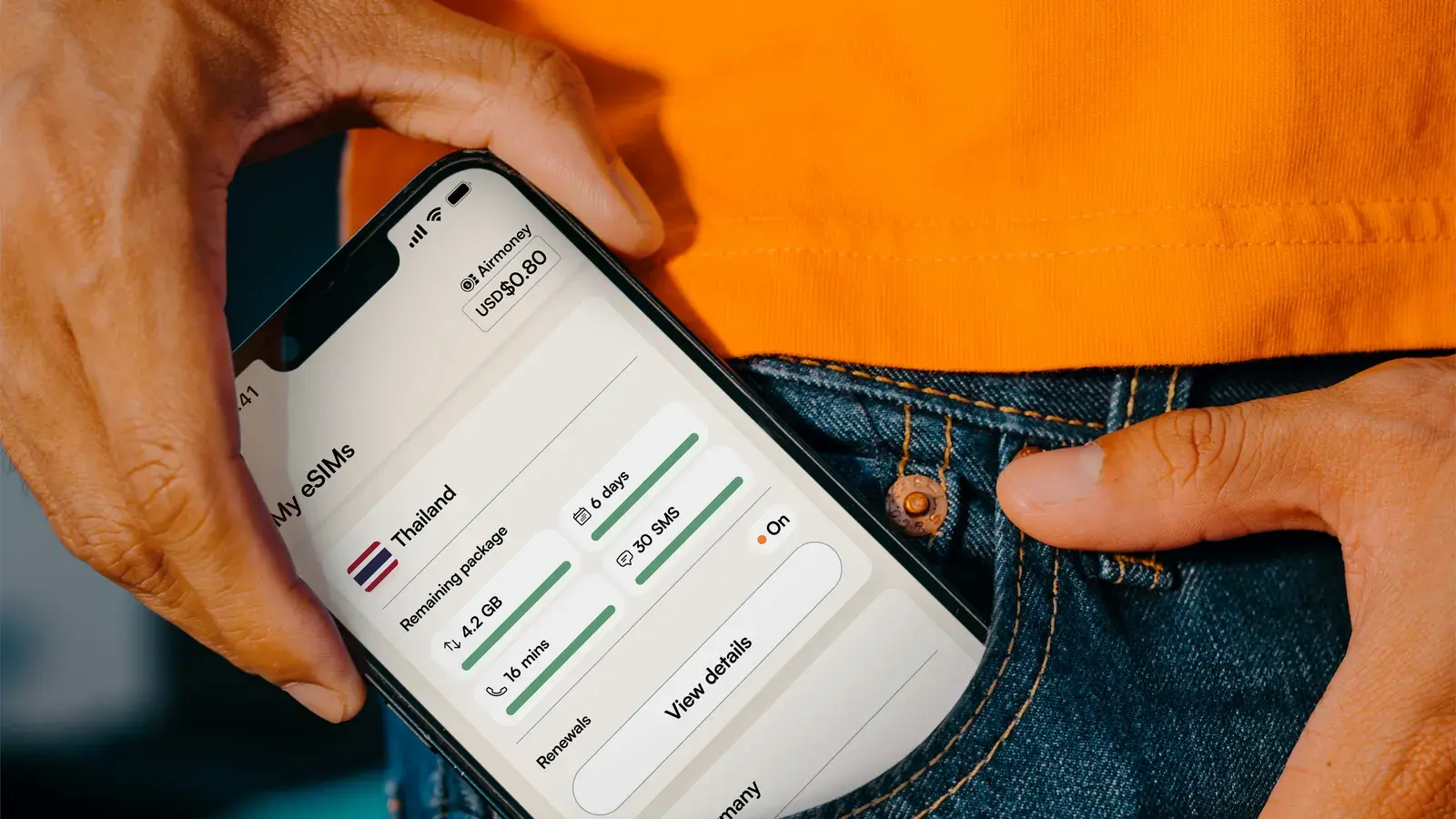
An eSIM is a SIM built into your phone rather than a plastic card you slot in. That means a travel-data provider can sell you a plan for your destination and deliver it instantly — usually as a QR code or through an app — without shipping anything. Your normal SIM (and your phone number) stays in place; the travel eSIM simply runs alongside it to carry your data abroad. Most phones sold in the last few years support it; you can check compatibility in seconds in our what-is-an-eSIM guide.
Our picks for 2026
Airalo — the best all-rounder
Airalo is the broadest and most-trusted travel-eSIM marketplace, with local, regional and global plans across 200+ countries. You pick a set data amount (say 5GB for a fortnight), top it up in the app if you run low, and pay only for what you need. It is the provider we point most travellers to first, because the coverage is enormous and the value on short-to-medium trips is hard to beat. Full detail in our Airalo review.
Partner
Airalo
Local, regional and global eSIM data for 200+ countries — install before you fly, switch on when you land.
Yesim — the flexible alternative
Yesim covers 150+ destinations and stands out for flexible plan formats: per-country and regional data alongside pay-as-you-go and a global option that suits travellers whose usage is hard to predict or who hop between many countries. If you want more choice in how you pay for data, it is well worth comparing against Airalo for your trip. Full detail in our Yesim review, and see them side by side in Airalo vs Yesim.
Partner
Yesim
Flexible travel data — per-country, regional, pay-as-you-go and global — across 150+ destinations.
Saily — the security-minded pick
Saily is the travel eSIM from the team behind NordVPN, pairing per-country and regional plans across 200+ destinations with a polished app and a privacy-first reputation. If you already use Nord's tools, or simply prefer buying from an established security company, it is a sound choice. Full detail in our Saily review.
Partner
Saily
Per-country and regional travel data from the NordVPN team — a clean app and a privacy focus.
Holiday.com — the ExpressVPN team's global eSIM
Holiday.com is the travel eSIM from the team behind ExpressVPN, giving you data across 150+ destinations from a single reusable eSIM you top up as you go. The appeal is convenience and privacy pedigree — one eSIM for many countries, backed by a name known for secure connections. Full detail in our Holiday.com review.
Partner
Holiday.com
A global travel eSIM for 150+ destinations from the ExpressVPN team — one eSIM, topped up as you travel.
How to choose in under a minute
- Widest coverage and best value for one or a few countries: Airalo — buy the data amount that matches your trip.
- Flexible formats or a global plan for many countries: Yesim.
- A security-brand app, or you already use NordVPN: Saily.
- A single global eSIM from a privacy-focused name (the ExpressVPN team): Holiday.com.
- A multi-country trip within one region (e.g. several European countries): buy a REGIONAL plan, not one per country — more in our best eSIM for Europe guide.
What every travel eSIM has in common
Before comparing brands it helps to know what you are buying from all of them, because the similarities are larger than the differences. None of these companies owns a mobile network. Each contracts with local operators in the countries it sells, and your phone connects to one of those operators' masts exactly as a visiting foreign subscriber would. That single fact explains most of what travellers find surprising: why speeds vary by country rather than by brand, why coverage in a mountain valley owes nothing to the logo on the app, and why two providers can feel identical in one country and quite different in the next. When you read a review complaining about performance, the useful question is which host network was involved, not which reseller.
They also share a set of practical constraints. These are data plans, not phone lines, so they do not give you a local number and cannot receive an ordinary text message. The profile normally installs once, which means deleting it to tidy your settings usually destroys it rather than parking it. Downloading the profile requires an internet connection, so the installation must happen before you need it. And plan validity is measured in days, with the clock typically starting when the eSIM first connects abroad rather than when you pay — though that rule is set per provider and is worth confirming for the plan in front of you.
How to compare plans without being misled
The instinct is to compare on price per gigabyte, and that is the right measure applied wrongly more often than not. A price per gigabyte is only comparable between two plans when three other things match: the list of countries actually covered, the number of days the allowance remains valid, and whether unused data can be extended by a top-up or simply expires. A cheaper plan with a shorter validity window that expires mid-trip is not cheaper, and a regional plan that omits one country on your itinerary is not a substitute for one that includes it.
So do the comparison in this order. Write down every country you will set foot in, including the one you change planes in if you expect to use your phone there. Find the plans that genuinely cover all of them. Check the validity period against the length of your trip, with a margin for delays. Only then compare price, and only across the plans that survived the first three steps.
Working out how much data you actually need
Every guide that tells you a number is guessing, because usage varies by an order of magnitude between travellers doing the same trip. There is a better method, and it takes two minutes: look at what you already use. Both iOS and Android record mobile data consumption per period in the settings, and the figure from a normal week at home is a far more reliable predictor of your travelling usage than any published average.
Then adjust it deliberately for how you will travel. Navigation, ride-hailing, translation and messaging are modest consumers. Video, uploading photographs and video calls are not, and they are the reason allowances disappear faster abroad than at home. Downloading offline maps, offline playlists and any long viewing over hotel wi-fi before you leave the room removes most of the risk. And if you are wrong, a top-up mid-trip is a minor inconvenience rather than a disaster — which is a good argument for starting with a smaller plan than your instincts suggest.
When you should not buy a travel eSIM at all
In fairness to the alternatives, there are three cases where the honest answer is to save your money. The first is travel within the European roaming area on a plan issued inside it, which is covered in detail in the best eSIM for Europe — if your own allowance already follows you across the border at domestic rates, a second plan buys you very little. The second is a home operator with a genuinely reasonable travel add-on: some sell a flat daily rate that uses your existing allowance abroad, and on a short trip that can beat buying separately, provided you check the price against the days rather than assuming. The third is a long stay in one country, where a local prepaid plan bought on arrival will usually beat any travel eSIM on cost per gigabyte and gives you a local number as well.
The travel eSIM wins clearly in the ordinary middle: a trip of days to a few weeks, outside your operator's inclusive area, where you want to land already connected and never think about it again. That is most holidays, which is why the category has grown as fast as it has.
The pre-departure checklist
- Confirm the handset is eSIM-capable and not carrier-locked, at home, where it is fixable.
- Check the plan's country list against every country on your itinerary, transit included.
- Check the validity period against your trip length, plus a margin.
- Install the profile on home wi-fi before you fly, and label the line clearly.
- Keep a screenshot or copy of the activation details somewhere you can reach offline.
- Leave your home line enabled for texts so bank and account codes still arrive.
- On arrival, enable data roaming on the travel line and set it as the line for data.
A few honest caveats
Prices, plan sizes and coverage change often, so treat any figure you read online — here included — as a snapshot and confirm the current plan on the provider's own page before you buy. Check your phone is eSIM-compatible and carrier-unlocked first. And remember a data eSIM gives you data, not a local phone number for calls and texts on your own line; your home number keeps working over the internet (WhatsApp, iMessage, etc.) as normal. Get those basics right and you will land connected, every time.
One further caveat is worth stating plainly, because it affects every provider on this page. A travel data plan rides on a host network as a visitor, and a visiting connection is not always treated identically to a local subscription during periods of congestion. That is not a reason to avoid travel eSIMs, which work well for the overwhelming majority of trips; it is a reason to keep expectations proportionate, to avoid depending on a single connection for something critical, and to have the operator's support route saved before you need it.
New to all of this? Read what an eSIM is and how to install one. Ready to compare the two? See Airalo vs Yesim. Heading across the continent? Start with the best eSIM for Europe.
Continue Reading
More from the Journal

Continue in this collection

Travel Planning
Budgeting, insurance and concierge services, judged on what they do when a trip goes wrong.

Travel Guides
Destination guides written to be used on the ground: where to stay, eat, and what to skip.

5-Star Hotels
What actually earns the fifth star, and which properties are coasting on one they were given years ago.