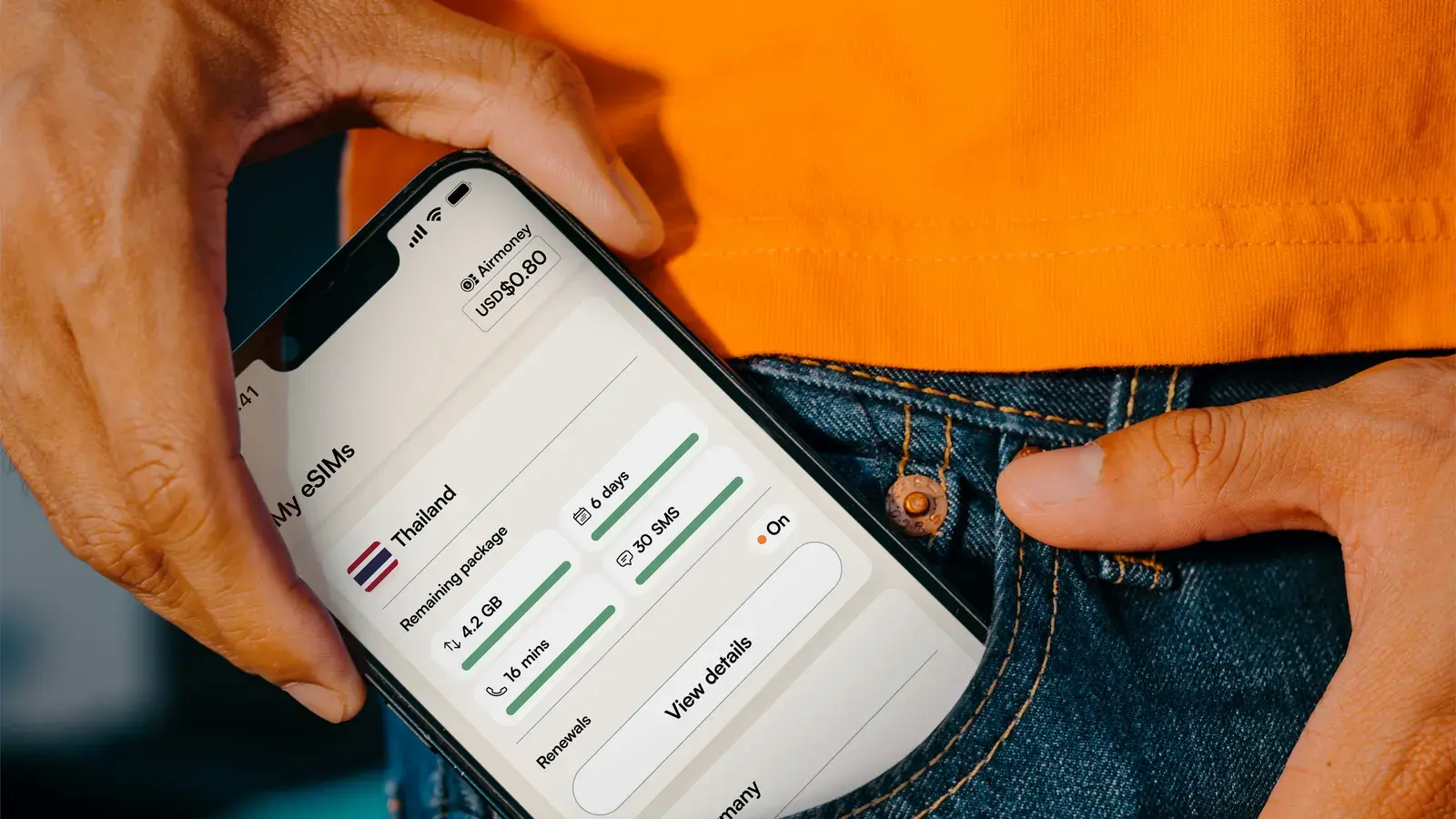
Holiday.com eSIM Review: The ExpressVPN Team's Travel eSIM
One reusable global eSIM, from a name known for privacy
Holiday.com eSIM review: the travel eSIM from the family behind ExpressVPN. 150+ destinations, browser checkout, one reusable eSIM, and who should skip it.
By NorwegianSpark Editorial — written with AI assistance and reviewed by the NorwegianSpark SA editorial team.
Holiday.com is a legitimate travel eSIM that presents itself as coming "from the family behind ExpressVPN", one of the best-known names in consumer privacy. It covers 150+ destinations with country, regional and global data plans, sold in your browser with no app required. Its pitch is convenience with a security pedigree: one reusable eSIM covering a large multi-country footprint, which you top up as you travel rather than buying a fresh eSIM for every border you cross. That single-profile model is the whole proposition, and whether it is worth choosing over the bigger marketplaces comes down to how many countries your trip actually touches. This review covers how it works, who it genuinely suits, and the rough edges. For the wider field, see the best travel eSIMs in 2026.
The short answer
Choose Holiday.com if you are crossing several countries on one trip and want one profile on your phone instead of four, or if buying connectivity from an established security brand rather than an anonymous reseller matters to you. Choose a marketplace like Airalo instead if you are visiting a single country, where a local plan is usually the better value, or if you want the longest track record and the deepest pool of user reviews behind your purchase. Confirm the current destination list and plan pricing on Holiday.com's own page before buying — eSIM coverage lists and prices change frequently, and any figure quoted in an article is a snapshot.
What you get
- One reusable eSIM profile: install it once, then buy local, regional or global data against the same profile on subsequent trips instead of installing a new eSIM each time.
- Country plans for 150+ destinations plus Europe, Asia and global passes — the regional and global packs are the point of difference, genuinely useful on multi-country itineraries and largely irrelevant on single-country ones.
- Browser checkout: pay by card or Apple Pay on the website, then scan a QR code or tap a direct-install link straight after checkout. Apps exist on the App Store and Google Play, but you do not need one to buy.
- A long runway: Holiday.com says you have one year from purchase to start using a plan, and starting late still gives you the full plan duration.
- Data-only service. Your home number stays active on your primary line for calls and texts, provided your phone can run a physical SIM and an eSIM at the same time.
- 24/7 support, and the standard eSIM convenience: buy online before you fly, land connected.
Partner
Undercover Tourist
Partner
Holiday.com
A global travel eSIM from the ExpressVPN team — one reusable eSIM, topped up as you travel. Check the current destination list and plan prices before buying.
How a travel eSIM actually works, and what that means here
An eSIM is a carrier profile downloaded onto a chip already soldered into your phone, rather than a piece of plastic you insert. Two consequences follow, and they cause most of the problems travellers hit.
First, downloading the profile requires an internet connection. That sounds obvious until you are standing in an arrivals hall with no data trying to install the eSIM that was supposed to give you data. Install it on your home Wi-Fi before you fly. On most providers the plan's validity period starts when the eSIM first connects to a network abroad rather than at the moment of purchase, but that is a per-provider rule and not a universal one, so check it for the plan you buy rather than assuming.
Second, your phone must be eSIM-capable and not carrier-locked. A device locked to your home network will refuse another carrier's profile, and this is the single most common reason a travel eSIM fails to activate. Check both before you buy, because it is far easier to resolve at home than abroad. What is an eSIM covers the underlying technology, and eSIM versus physical SIM covers when the plastic still wins.
Data-only: the part that catches people out
Holiday.com, like essentially every travel eSIM, sells data and not a phone line. Practically, that means anything running over the internet works normally — WhatsApp, Signal, iMessage, FaceTime, email, maps, calls placed through those apps. What does not work is anything that depends on a local voice or SMS channel.
The consequence worth planning for is two-factor authentication. If your bank sends one-time codes by SMS, those codes go to your home number, not the eSIM — so keep your home line enabled to receive texts, even with data roaming switched off on it, or move that account to an authenticator app before you travel. Being locked out of your own bank in a foreign country because you disabled the line the codes arrive on is a genuinely common and entirely avoidable travel failure. The same applies to any local number you might need to be called back on: a restaurant, a driver, a hotel. They cannot call an eSIM data plan.
When one reusable eSIM actually beats buying per country
This is the honest test for Holiday.com specifically. On a single-country trip the reusable-profile advantage is worth almost nothing — you install one eSIM either way, and a country-specific plan from a large marketplace is usually cheaper per gigabyte than a regional or global pack, because regional plans price in the flexibility you are not using.
The model earns its keep from roughly three countries upward, and it compounds with how often you travel. On a multi-country itinerary you avoid the genuine friction of installing, switching between and eventually deleting several profiles mid-trip, and on subsequent trips you top up an eSIM you already have rather than starting again. If you travel a few times a year across varied destinations, that convenience is real. If you take one two-week holiday to one country, it is not, and you should buy locally. The best eSIM for Europe in 2026 covers the regional-plan maths for the most common multi-country case.
Where it still has rough edges
It is a newer product than the established marketplaces, so its track record is shorter and the pool of independent user reviews is thinner — which matters more than it sounds, because with any eSIM you are ultimately buying access to whichever local partner network the provider has contracted in that country, and reviews are how you find out whether that partner is any good where you are going. There have been user reports of billing and data-amount complaints; check your plan details and confirm the allowance you have actually purchased.
Setup on Android can require entering the APN manually, which is more fiddly than the smoothest rivals. If you have data but nothing loads after activation, the fix is almost always one of three things: data roaming is switched off on the eSIM line, the eSIM is not selected as the line for cellular data, or the APN needs setting by hand. Check those in that order before contacting support.
And it is metered data, so it suits normal phone use rather than all-day laptop tethering or streaming. For a long stay in one country — a month or more — a local physical SIM or a local operator's own plan will usually beat any travel eSIM on cost per gigabyte, and the extra effort is worth it at that duration.
Verdict
Holiday.com is a credible, privacy-minded travel eSIM, and the reusable single-profile model is a genuine convenience for people whose trips cross borders. It is not the value pick for a single-country holiday, and it does not yet have the review history of the largest marketplaces. Compare it against Airalo for coverage breadth and track record, and against Saily if what draws you is the security-brand pedigree rather than the global pack — the two are close competitors on that specific pitch. Confirm current plans, the destination list and pricing on Holiday.com's own page before buying.
Frequently asked questions
Is Holiday.com eSIM legit?
Yes. Holiday.com presents itself as coming "from the family behind ExpressVPN", sells its plans through its own site and through apps on the App Store and Google Play, and lists 24/7 customer support. Its track record is shorter than the largest marketplaces', so check recent user reports for your destination.
Do Holiday.com eSIM plans expire?
Holiday.com says you have one year from the day of purchase to start using a plan, and that starting on day 365 still gives you the full plan duration. For destination-by-destination options, see our [country eSIM guides](/esim).
Does a travel eSIM give you a phone number?
No. Holiday.com, like essentially every travel eSIM, sells data and not a phone line. Anything running over the internet works normally — WhatsApp, Signal, iMessage, FaceTime, email, maps and calls placed through those apps. What does not work is anything that depends on a local voice or SMS line.
Will my bank's SMS security codes still work on a travel eSIM?
Not on the eSIM. One-time codes sent by SMS go to your home number, not the travel eSIM, so keep your home line enabled to receive texts — even with data roaming switched off on it — or move that account to an authenticator app before you travel.
Can you install a travel eSIM after you land?
Only if you can get online. Downloading the carrier profile requires an internet connection, which is a problem in an arrivals hall with no data. Install it on your home Wi-Fi before you fly.
Why will my travel eSIM not activate?
Almost always the handset. Your phone must be eSIM-capable and not carrier-locked — a device locked to your home network will refuse another carrier's profile, and that is the single most common reason a travel eSIM fails to activate. Check both before you buy.
I have data but nothing loads — what is wrong?
On Holiday.com the fix is usually one of three things: data roaming is switched off on the eSIM line, the eSIM is not selected as the line for cellular data, or the APN needs entering manually — which on Android this provider can require.
Is Holiday.com worth it for a single-country trip?
No. On a single-country trip the reusable-profile advantage is worth almost nothing, and a country-specific plan from a large marketplace is usually cheaper per gigabyte. The model earns its keep from roughly three countries upward.
Continue Reading
More from the Journal




Continue in this collection

Travel Planning
Budgeting, insurance and concierge services, judged on what they do when a trip goes wrong.

Travel Guides
Destination guides written to be used on the ground: where to stay, eat, and what to skip.

5-Star Hotels
What actually earns the fifth star, and which properties are coasting on one they were given years ago.