Car Hire in Japan: What to Know Before You Book
Where the train wins, where the car does, and the licence rule that stops trips
Renting a car in Japan: settle the licence question first, then driving on the left in an automatic, expressway tolls, winter roads and where a car wins.
By NorwegianSpark Editorial — written with AI assistance and reviewed by the NorwegianSpark SA editorial team.
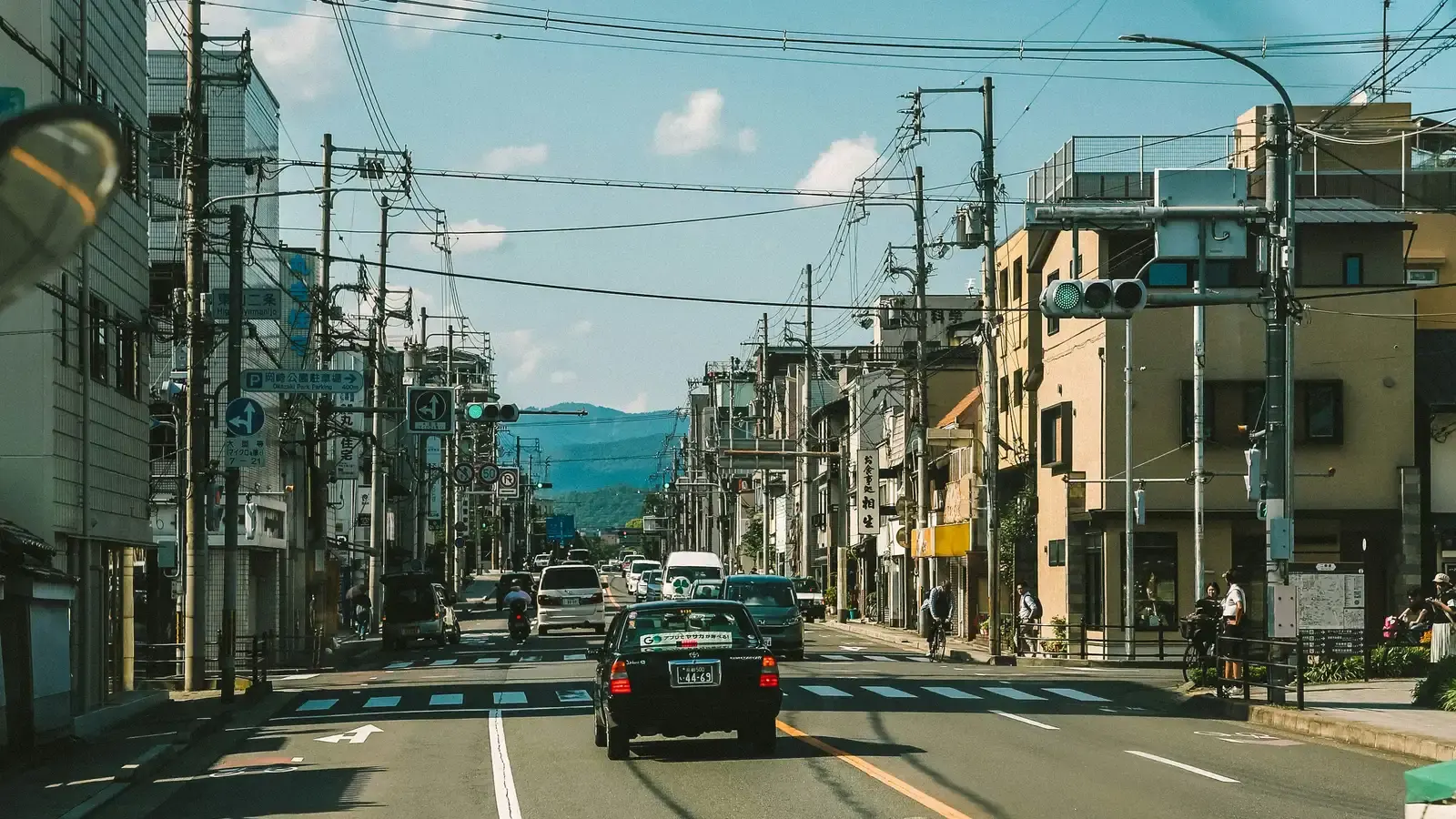
Japan is the country where the usual advice inverts. Almost everywhere else, a hire car is how you escape the limits of public transport; in Japan the rail network is so good that between the major cities the car is simply the slower, dearer option. But step off the main corridors — into Hokkaido, Kyushu, the Japan Alps, Shikoku, Okinawa — and the calculation flips completely, because that is where the trains thin out and the drives are superb. Work out which trip you are taking before you book. For the underlying method, start with how to rent a car abroad without overpaying.
Settle the licence question first — before anything else
Japan is the one destination on this site where we would tell you to confirm the paperwork before you even compare prices. Its requirements for foreign drivers are more specific than most of Europe's, and not every international permit that works elsewhere is accepted here. Which document you need depends on the country that issued your licence, and for some countries the answer is not an international permit at all but an official translation obtained through a designated body.
We are deliberately not telling you which one applies to you, because getting that wrong from a summary is how people arrive at a rental desk and leave without a car. Check your own government's guidance and the Japanese authorities' own information, obtain whatever they specify before you fly, and carry it alongside your national licence and passport. A rental desk in Japan will not improvise around a missing document, and no booking site's checkout will warn you.
Partner
DiscoverCars
Driving on the left, in an automatic
Japan drives on the left, with the steering wheel on the right. If that is unfamiliar, the adjustment is mostly fine on open roads and hardest in the first hour, at junctions, and in car parks — so plan a gentle first leg rather than collecting a car and immediately joining heavy traffic.
The transmission situation is the reverse of southern Europe: automatics are the norm rather than the scarce option, so the class you want is generally available without booking months out. What is worth thinking about is size. Japanese urban streets, older car parks and the mechanical tower parking systems many hotels and shopping centres use all impose real limits on vehicle height, width and length. The smallest car that carries your luggage is again the right answer, and a compact class will fit places a larger one is simply turned away from.
Expressway tolls
The expressway network is tolled, and the charges add up quickly over the distances that make a Japanese road trip worthwhile. Tolls are collected either at staffed or card lanes, or electronically through a dedicated in-car device with a separate card — a system whose lanes are clearly marked and which you should not enter without the equipment.
Rental companies commonly offer the electronic option as an add-on, and some also offer visitor-oriented passes covering unlimited expressway travel in a region over a set number of days. Whether either is worth taking depends entirely on your route, so ask at the desk what the car is fitted with, how the tolls will be billed to you afterwards, and what is added for handling them. As everywhere, get the answer onto the agreement rather than take it verbally.
Where the car wins, and where it loses
- Tokyo, Kyoto and Osaka: the train wins decisively. Traffic is heavy, parking is expensive and scarce, and the rail network reaches everything a visitor wants. A car parked in a city is a cost with no benefit.
- Hokkaido: the car wins outright. Distances are long, the landscape is the point, and public transport does not reach most of it.
- Kyushu, Shikoku, the Japan Alps and the Noto and Izu peninsulas: the car wins, for the same reason — the good parts are between the stations, not at them.
- Okinawa and the smaller islands: the car generally wins, hired locally on the island rather than brought from the mainland.
The best-structured Japanese trip therefore often uses both: rail for the city legs, then a car collected at a regional station or airport for the rural section and returned before the next train. That also avoids paying for a vehicle to sit in a city car park for three days. If you are still working out the accommodation side of the same trip, Airbnb versus a hotel in Japan covers the other half of the decision.
Seasons, and the roads in winter
Snow country is not a figure of speech. Large parts of Hokkaido, Tohoku and the mountain routes see serious winter conditions, and driving them requires the car to be properly equipped — which is a question to put to the supplier explicitly rather than assume, since the vehicle you are given in a mild region may not be prepared for the region you are driving to. Some mountain roads close entirely for part of the year. Check whether the route you have planned is actually open on your dates before building a day around it.
Before you sign at the desk
- Carry your national licence, passport and whatever permit or official translation the authorities specify — all three, not two of them.
- Settle your excess cover before you travel rather than at the counter — see car rental insurance explained.
- Confirm what the car is fitted with for tolls, how the charges reach you, and what handling is added.
- Ask whether the car is equipped for the conditions on your actual route, not the conditions where you collected it.
- Photograph the car from every angle before driving away and again on return, including wheels, roof and windscreen.
- Ask which charges can arrive after the rental ends — see avoid hidden car rental fees.
Getting the best rate
Rates vary between suppliers at the same airport and station depots, and the regional airports serving the best driving are where the spread is widest. Compare car hire in Japan on DiscoverCars, read the reviews for the specific pick-up point rather than the brand, and hold a free-cancellation rate you can re-shop as the dates approach.
Partner
DiscoverCars
Compare Japan car-hire deals across the major rental companies in one search — free cancellation on most bookings.
Driving elsewhere on the same trip? See car hire in Thailand, and keep maps and translation working away from the cities with a travel eSIM.
Continue Reading
More from the Journal

Continue in this collection

Travel Planning
Budgeting, insurance and concierge services, judged on what they do when a trip goes wrong.

Travel Guides
Destination guides written to be used on the ground: where to stay, eat, and what to skip.

5-Star Hotels
What actually earns the fifth star, and which properties are coasting on one they were given years ago.