
Best 5-Star Hotels 2026: Our Honestly Ranked List
Not all five-star hotels deserve five stars
The best five-star hotels for 2026 by region — Asia Pacific, the Middle East, the Mediterranean, the Caribbean — and what separates great from average.
By Thomas Lovas Lokoy — researched and drafted with AI assistance from published sources; edited and published by NorwegianSpark SA. Editorial policy.
What We Look For
This guide draws on published rates, guest reviews, and property information across leading five-star hotels worldwide, where the label itself means very little. Star ratings are self-assigned in most countries and there is no global standard. What we look for is consistency of service, the quality of the bed and bathroom, how well the restaurant performs compared to standalone restaurants in the same city, and whether the hotel has a genuine sense of place or could be anywhere in the world. The best luxury hotels make you feel like you are somewhere specific, not inside a generic template of marble and gold. What a five-star hotel actually requires goes into why the rating itself carries so little information. If you are weighing whether a hotel or a private villa suits your trip better, private villa versus hotel breaks that decision down.
Asia Pacific
Asia continues to set the global benchmark for luxury hospitality. The Aman Tokyo remains our top pick for the region — the lobby alone, with its vast paper-screen walls and camphor-wood floors, makes every other hotel lobby feel cluttered. Service is telepathic: staff anticipate needs without being intrusive. In Southeast Asia, the Amanoi in Vietnam and the Capella Singapore both stand out this year. The Capella in particular has raised its food programme significantly, with a new tasting menu that rivals any Michelin-starred restaurant in the city.
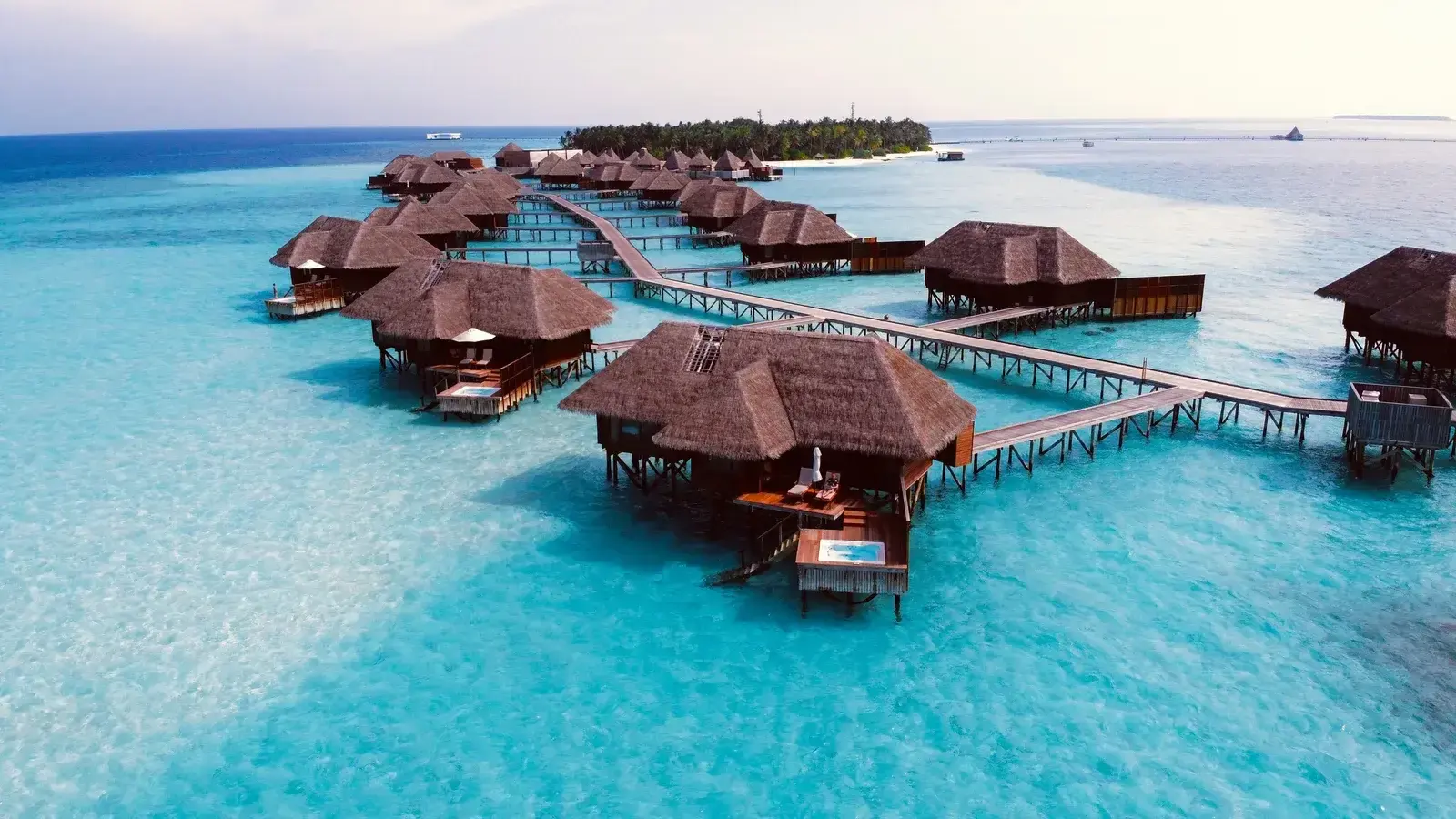
In the Maldives, the Soneva Fushi stands out as the most complete experience — the overwater observatory, the outdoor cinema, and the no-shoes-no-news philosophy create something genuinely different. For the full Maldives breakdown — atolls, transfer logistics and villa types — see the Maldives luxury guide, or the best Maldives resorts for 2026 for the property shortlist.
Middle East
The Middle East has thrown extraordinary money at hospitality and some properties justify the investment. The Royal Mansour in Marrakech — technically North Africa but often grouped with Middle Eastern luxury — operates on a level that few hotels in the world can match. Each accommodation is a private riad within the hotel compound, with its own plunge pool, rooftop terrace, and dedicated butler. In Dubai, the One&Only One Za’abeel stands out for its design restraint in a city that rarely exercises any. Abu Dhabi’s Saadiyat Island hotels are worth watching as the cultural district around the Louvre Abu Dhabi continues to develop.
“The best luxury hotels make you feel like you are somewhere specific, not inside a generic template of marble and gold.”
Mediterranean
The Mediterranean hotel scene is the most competitive in the world, which is good news for guests. On the Amalfi Coast, the Belmond Hotel Caruso in Ravello sits at the top of the list for its clifftop infinity pool, set high enough above the coastline that it reads as merging with the sky. In Greece, the Canaves Oia Epitome in Santorini pairs Cycladic architecture with genuinely modern luxury and west-facing caldera terraces. Southern Spain’s Finca Cortesin near Marbella is the dark-horse pick: a vast estate with a golf course, a beach club, and a sense of space that coastal Mediterranean hotels rarely achieve. For more in the region, see the Amalfi Coast luxury guide and, for the coast west of Monaco, the French Riviera guide.
Caribbean
The Caribbean luxury hotel scene has improved markedly. Our top pick is Eden Rock in St Barts, which reopened after hurricane damage with a thoughtful renovation that preserved its character while upgrading everything behind the walls. In the British Virgin Islands, the rebuilt Rosewood Little Dix Bay is stunning, with a beach that remains one of the most beautiful in the region. For families, the Four Seasons Nevis offers an incredible combination of beach, golf, and a kids’ programme that actually engages children rather than parking them in front of screens.

What Separates Great From Average
The markers of a genuinely great five-star hotel:
- Staff remember your name and preferences without being told twice
- The restaurant would succeed as a standalone venue
- The room has thoughtful details: proper blackout curtains, intuitive lighting, a minibar that is not a profit centre
- Check-in takes under five minutes and check-out is seamless
- The Wi-Fi works everywhere, including the pool and garden
- Noise isolation is excellent — you never hear the room next door
What Actually Goes Wrong at Expensive Hotels
Complaints at this end of the market are rarely about the things guests brace for in advance. The bed is almost always fine. What goes wrong is more mundane and more avoidable: a renovation running on the floor above yours that nobody mentioned at booking, a sea view that turns out to be a sliver visible from one corner of the balcony, the signature restaurant closed for its annual break during precisely the week you are there, or a spa operating reduced hours out of season. None of these is a scandal. All of them are knowable in advance, and none of them appears on a rate page.
The second recurring problem is the gap between a hotel's own description of its location and the reality of moving around it. Resort properties in particular describe themselves as minutes from a town centre without saying whether that means a walk, a shuttle running twice a day, or a taxi you will need to arrange each time. On a city stay the equivalent is a hotel that is technically central but separated from everywhere you want to be by a road nobody crosses on foot. Neither is a defect in the property; both change the trip considerably.
Questions Worth Asking Before You Book
Send these to the property directly, by email, and keep the reply. A hotel that answers them plainly is usually the sort of hotel that gets the rest right too.
- Is any construction or renovation scheduled on the property, or on an adjacent site, during our dates?
- Which restaurants, bars and spa facilities will be open, and on which days? Annual closures are common in shoulder season.
- What exactly does the room category we are booking look out on, and is there a specific room or wing you would recommend?
- How do guests get to and from the nearest town, and is that service included, chargeable, or on a fixed timetable?
- What time is the room genuinely likely to be ready given our arrival time, and where can we wait if it is not?
- Is anything charged separately on arrival that is not in the rate — a resort or facility fee, a local tax, a mandatory service charge?
When Five Stars Is the Wrong Purchase
The honest counter-argument to this entire list: on a great many trips, the fifth star is the least efficient money you will spend. Its value is concentrated in service, dining and the quality of the public spaces, all of which you have to be on the property to consume. If your plan is to leave at eight each morning and return at eleven at night, you are paying a substantial premium for a lobby you walk through. On that kind of trip a well-run four-star in the right street beats a famous name in the wrong one, and the difference is better spent on the days themselves. The five-star premium earns its keep when the hotel is the destination, or a meaningful part of it — a resort week, a honeymoon, a stay where the pool and the restaurant are the plan rather than the fallback.
Booking Tips
Price the hotel on both channels before you book. Direct bookings at chain hotels often carry perks — room upgrades, late checkout, breakfast, and loyalty points — that a platform booking does not earn, while platforms usually win on comparison, review transparency and flexible-rate depth; direct versus online travel agency works through which wins when. If you are combining a hotel stay with local experiences, Pelago covers curated activities and Undercover Tourist covers attraction tickets and skip-the-line passes. For the airport-to-hotel leg, pre-book a private transfer rather than joining the taxi queue on arrival — the airport transfers guide covers the options.
Partner
Pelago
Pelago partners with luxury hotels to offer exclusive guest experiences — private tours, spa packages, and dining events that are not available through standard booking channels.
Partner
Undercover Tourist
Undercover Tourist offers discounted tickets to major attractions worldwide, including skip-the-line passes and bundled experiences.
Partner
Hotels.com
Compare and book hotels globally.
Partner
Pelago
Curated experiences and activities worldwide.
Partner
Undercover Tourist
Theme park tickets at reduced prices.
Continue Reading
More from the Journal





Continue in this collection
5-Star Hotels
What actually earns the fifth star, and which properties are coasting on one they were given years ago.

Luxury Destinations
Where to go and, more usefully, when — season, crowding and what closes out of it.
Travel Planning
Budgeting, insurance and concierge services, judged on what they do when a trip goes wrong.